


What is remote water monitoring?
Remote water monitoring uses automated, autonomous sensors to continuously track the chemical and physical properties of water bodies without manual sampling. These systems measure critical parameters such as turbidity, pH, nitrate, and dissolved oxygen and transmit the data from isolated locations (like reservoirs, river intakes, or coastal discharge points) to a central cloud platform. By leveraging solar power and hybrid telemetry (combining 4G/5G with satellite backup), modern remote water monitoring solutions allow operators to maintain 24/7 surveillance of water quality, ensuring regulatory compliance and enabling rapid response to pollution events, even in areas with no mains power or reliable cellular signal.
The Problem: Data Gaps in Remote Locations
For more than half a century, PMA Ltd has supported the UK’s water and industrial sectors with precision instrumentation. We understand that the most valuable environmental data often comes from the most inaccessible places.
Whether you are managing an abstraction point in the Welsh mountains or monitoring trade effluent at a coastal site, the challenge is identical: you need reliable data, but the site has no power and poor connectivity. Traditionally, this left operators with two flawed options: investing heavily in civil engineering to bring power to the site, or relying on spot-checks that can easily miss transient pollution spikes.
Drawing on our extensive manufacturing experience, we are proud to introduce a robust solution that eliminates these infrastructure headaches.
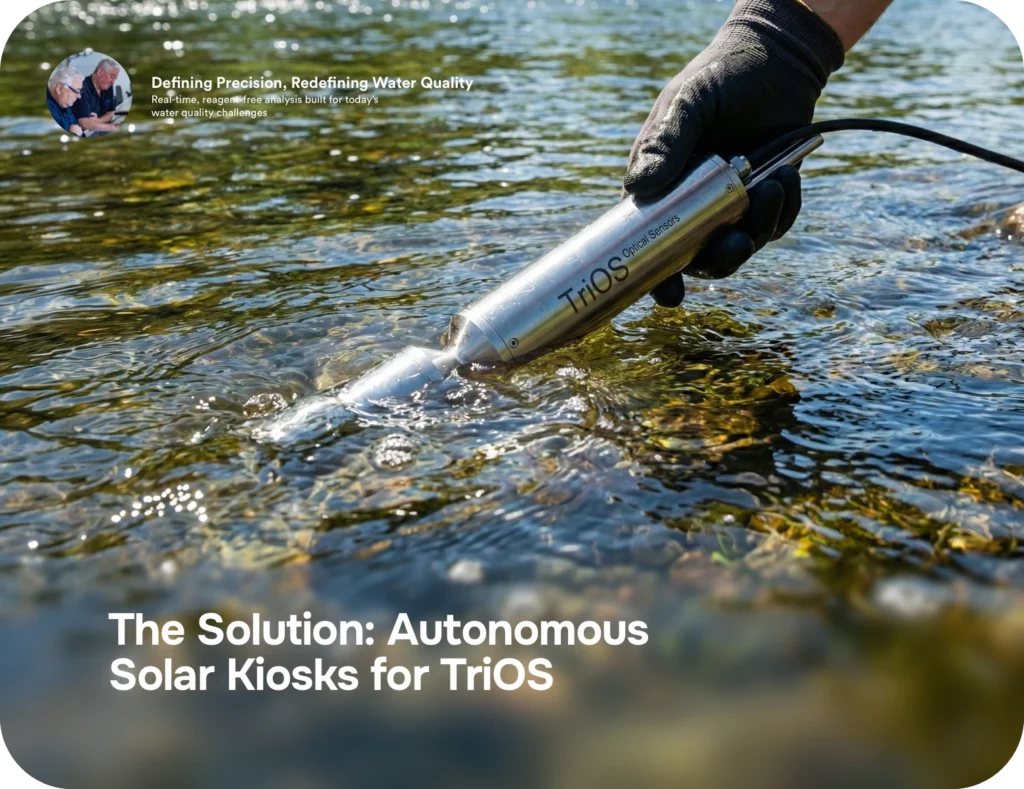
The Solution: Autonomous Solar Kiosks for TriOS, built for remote water monitoring
PMA is now capable of delivering a complete, standalone remote water monitoring station designed specifically for our TriOS instrument range. We have developed a secure, weatherproof kiosk that functions as a fully independent field laboratory.
This system is engineered to operate reliably without any connection to the grid. It combines advanced optical sensing with resilient power and telemetry to give you total visibility of your assets.
Inside the System: A Technical Breakdown
Inside the cabinet: The TriOS TriBox3 controller and robust power management system designed for 24/7 operation.
We have built this solution to be modular and adaptable. The core components include:
1. Flexible Sensor Configuration
You can tailor the monitoring payload to your specific needs. The station accommodates a range of high-performance optical sensors, such as:
- TriOS OPUS: Delivers spectral analysis for carbon and nitrogen compounds.
- NICO plus: Provides precise nitrate measurements.
- LISA UV: Monitors organic load and SAC254.
- VIPER, enviroFlu, and TTurb: Essential for tracking turbidity and fluorescence.
Configure your station with high-precision optical sensors, including the TriOS OPUS and NICO plus.
2. Advanced Control & Logging
The system is driven by the TriOS TriBox3 controller. This intelligent unit offers four sensor channels and extensive I/O options (Ethernet, RS-485 Modbus RTU, 4–20 mA, and relays). It acts as the local “brain,” managing data logging and sensor control on-site.
3. Intelligent Power Management
To ensure uninterrupted operation, the unit features a solar PV array paired with a battery bank, sized according to the specific location and sensor load. An MPPT charge controller optimises energy harvest, while fused DC distribution protects the hardware. We also include remote battery health monitoring for peace of mind.
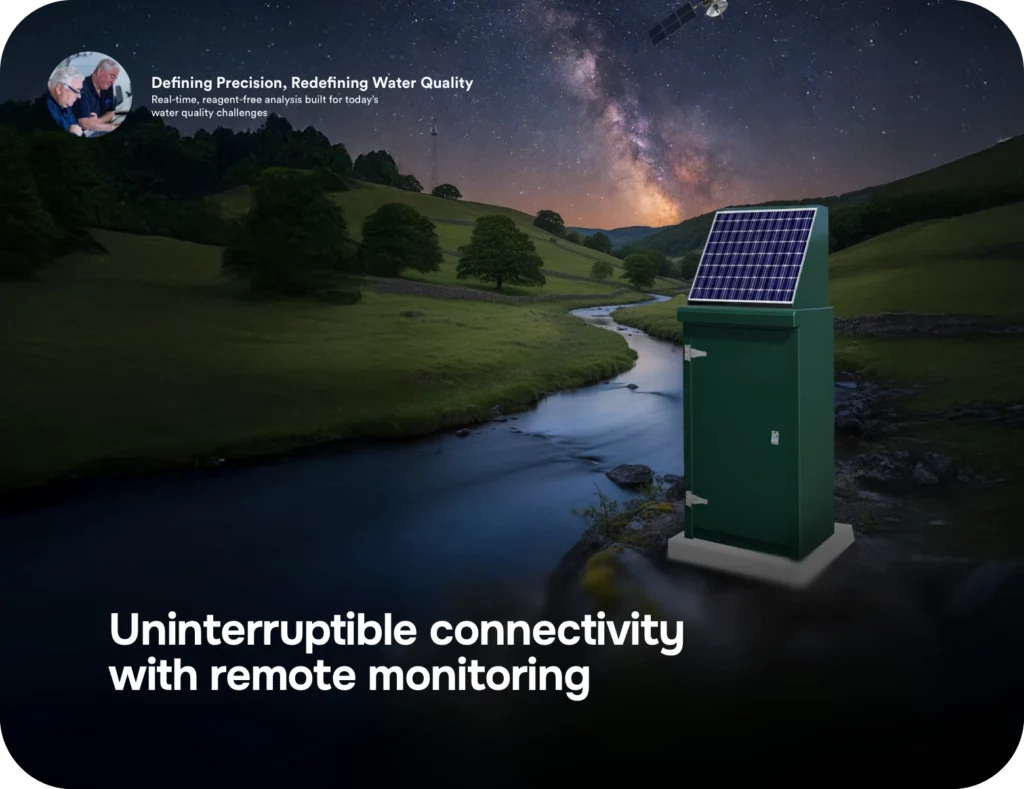
Uninterruptible Connectivity for remote water monitoring
In remote water monitoring, getting the data out is just as important as measuring it. Our system uses a multi-layered approach to guarantee data delivery:
- Primary Link: High-speed 4G/5G LTE with dual-SIM capability to switch networks automatically if one fails.
- Satellite Fallback: An integrated Iridium® satellite connection takes over if cellular coverage is lost completely, ensuring global reach.
- Secure Transport: Data is encrypted during transmission, and a “store-and-forward” feature buffers data during outages, uploading it automatically once the connection is restored.
Engineered for the Elements
These kiosks are built to withstand the UK’s demanding weather conditions. The outdoor enclosure is tamper-proof and fitted with IP-rated glands and surge protection.
To minimise maintenance trips, we have integrated smart features like nano-coated sensor windows, automatic air purges or W55 wipers, and system alarms that notify you of fouling or communication issues instantly.
Where Can You Use It?
This technology is ideal for any application where mains power is impractical. We see it delivering immense value in:
- Catchment Management: Monitoring river quality and upstream inputs.
- Drinking Water Safety: Protecting raw water intakes and boreholes.
- Flow Management: Overseeing reservoir inlets and compensation flows.
- Compliance: Tracking industrial outfalls and trade effluent.
- Sensitive Environments: Monitoring lagoons, reed beds, and nature-based treatment systems.
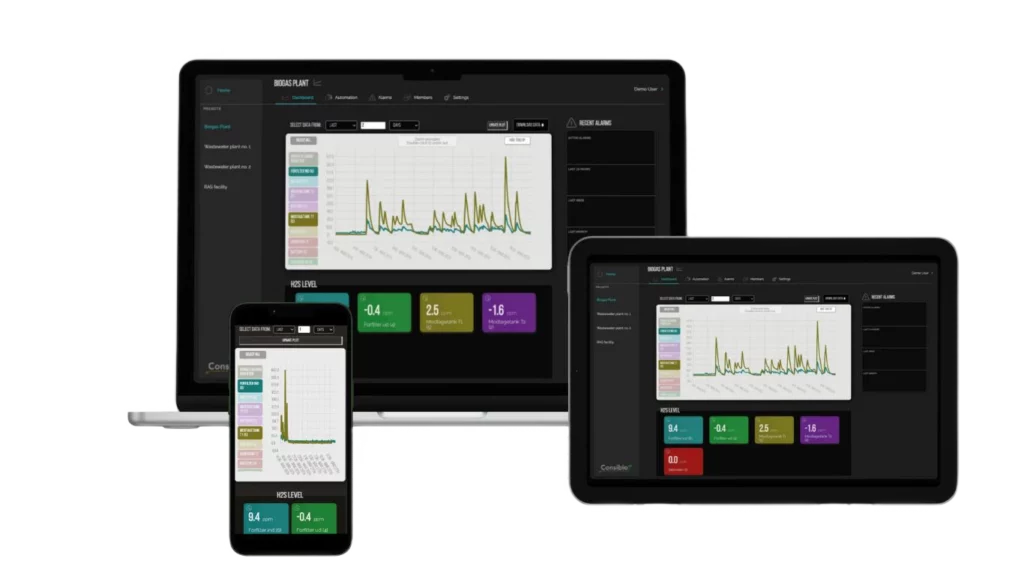
Smart Data Visualisation with PMA
Collecting raw data is only the beginning. We provide a smart, cloud-based dashboard that simplifies how you view and manage your remote water monitoring data.
Manage your water systems surveillance from anywhere with our secure, cloud-based dashboard.
Our platform offers a modern, intuitive interface that lets you track trends, manage alarms via SMS or email, and export datasets to your SCADA historian. For deeper analysis, our API allows seamless integration with third-party software.
Frequently Asked Questions (FAQs)
How does the solar system cope with British winters?
We size the solar array and battery bank specifically for the site’s latitude and the power demands of the sensors. By utilising MPPT charge controllers and configuring low-power duty cycles, the system maintains reliable operation even during the shorter days of winter.
What happens if the site has no mobile signal at all?
Our system is designed for exactly this scenario. It features a three-tier connection strategy: dual-SIM 4G/5G for standard operation, and an automatic Iridium® satellite backup that kicks in if terrestrial networks are unavailable. This ensures your data is transmitted regardless of local cell coverage.
Can I connect this to my existing SCADA network?
Yes. The TriBox3 controller supports industry-standard protocols like Modbus RTU (RS-485) and 4–20 mA signals. Furthermore, our cloud platform offers API access, HTTPS/MQTT, and simple export tools, allowing easy data ingestion into your existing historian or analytics platforms.
Is my data secure?
Security is a priority. All data transmitted from the PMA logger to the cloud is encrypted. Dashboard access is strictly controlled via user authentication, ensuring that sensitive data regarding compliance or water quality remains confidential.
Take Control of Your Off-Grid Assets
Stop letting infrastructure limitations create blind spots in your network.
Discover how our autonomous solutions can upgrade your monitoring strategy here:
Remote Water Quality Monitoring with Solar Power Kiosks