
“Chlorine residual” can hide an important distinction. Free chlorine and total chlorine are related, but they are not interchangeable labels. Before a team selects an online method, samples a process point or compares a trend, it should specify which result it needs and what decision that result will support.
Name the result accurately
The Drinking Water Inspectorate explains that chlorine may be present as free chlorine or as combined chlorine, including when ammonia is present. Total chlorine is the sum of free and combined chlorine. The DWI identifies free chlorine as the form of primary significance for disinfection; its cited guide is written for private supplies, so use it for terminology and chemistry context rather than as a substitute for a public-supply water-safety plan or regulatory arrangements.
This distinction matters in everyday reporting. A total-chlorine value should not be relabelled as a free-chlorine result, and a generic “chlorine” label can make a dashboard or handover ambiguous. Write the measurand in the specification, instrument display, trend report and sample record.
Let the operating question guide the measurement
Start with the task: is the team following a selected residual after treatment, investigating a change at a particular point, or reviewing how the measurement varies through a process or network? That answer shapes the sampling location, method, expected variation and response procedure.
When online, manual and laboratory results are compared, record the sample time and point, preparation, method, units and reporting basis. A difference may reflect non-comparable samples or methods; it is not automatically evidence that one instrument is faulty. Where a change is unexpected, use the site's agreed checks of analyser status, sample route and process conditions, and confirm the result when the relevant procedure calls for it.
Do not borrow a generic limit
The DWI's public information describes residual management in drinking-water distribution, while its technical treatment guide gives examples within the context of private supplies. Those contexts are not a universal alarm setting for every site. Applicable regulatory requirements, the site's water-safety plan, permit or operating procedure remain the authority for limits and escalation.
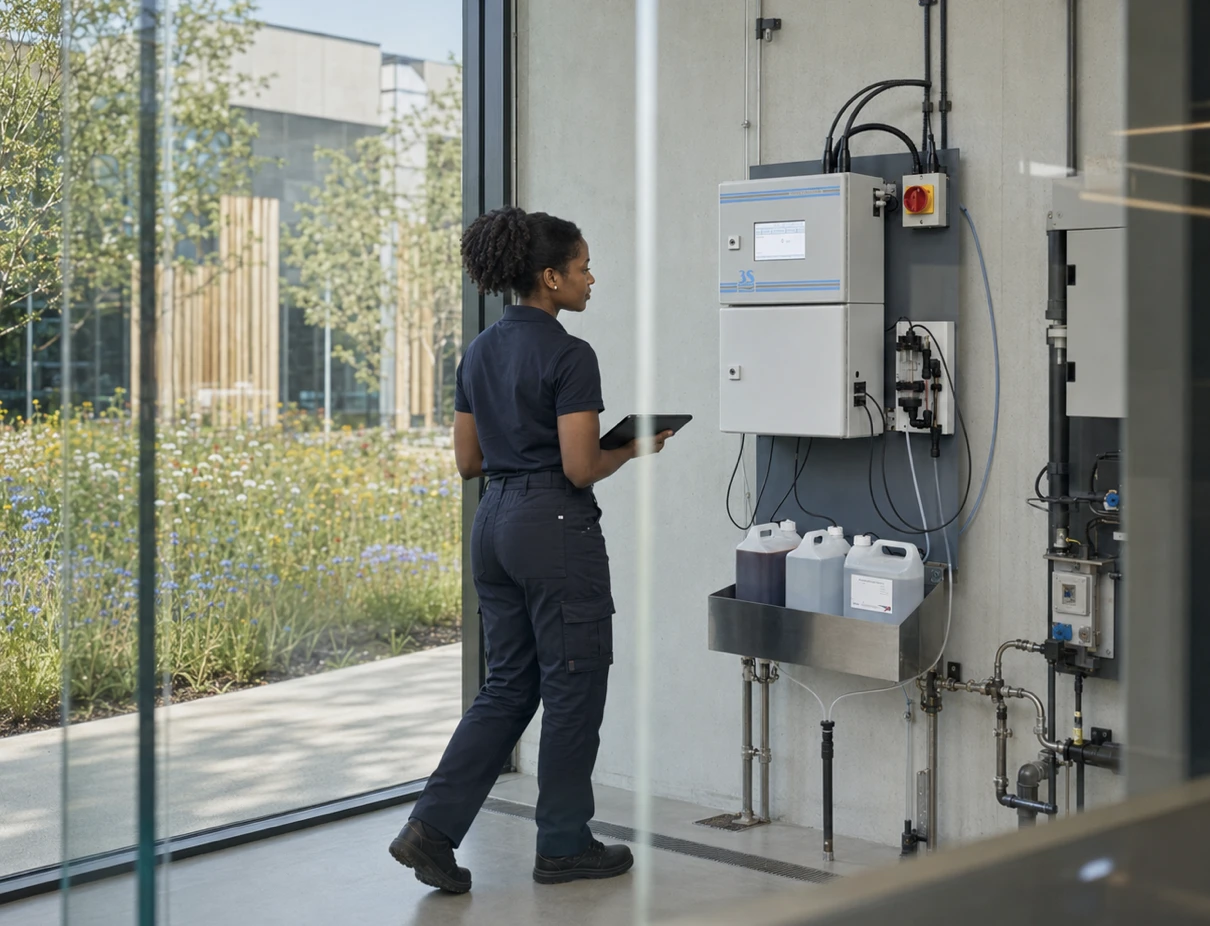
Likewise, the 3S free and total chlorine analyser page describes parameter-specific configurations; it does not establish that every configuration measures both simultaneously or suits every sample. Confirm the selected chemistry, method, range, sample conditions and maintenance needs for the application.
Prepare a useful application brief
Before comparing analysers, write down which chlorine result is required, where the sample will be taken, what decision the measurement supports, the expected range based on site evidence and how an unexpected trend will be checked. This gives the application review a clear basis and reduces ambiguity between the specification and the result operators see.
PMA's products and services overview includes the 3S online colorimetric analyser range. For a related PMA News example, see chlorine measurement in a solar-powered electrochlorination system. Contact PMA to discuss the application and the result the site needs.
Source attribution: This is an original PMA News adaptation informed by 3S Water Analysers' free-versus-total-chlorine monitoring article. It explains measurement terminology and does not replace a site's regulatory, sampling or water-safety arrangements.