
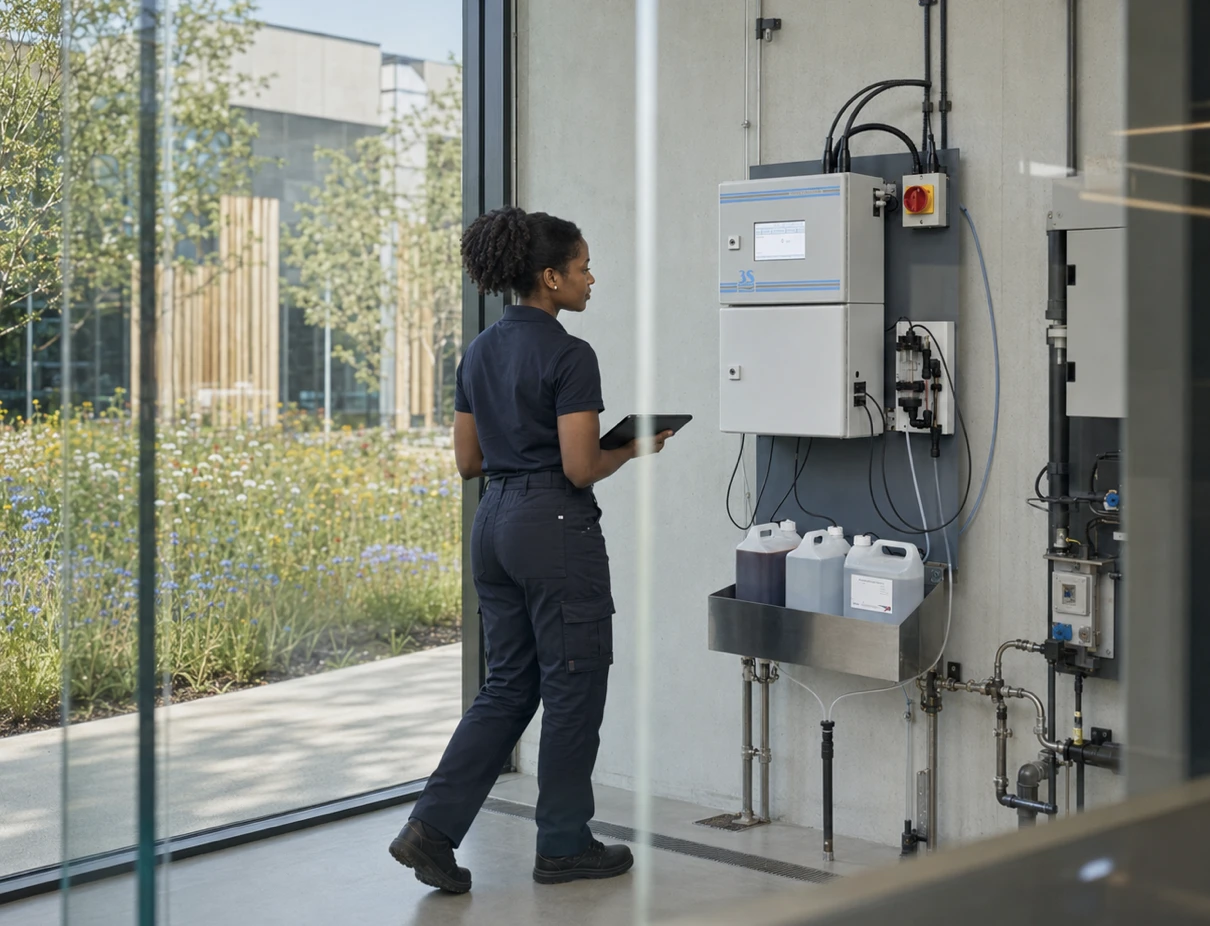

Online colorimetric analysis is more than a sensor taking a reading in a pipe. It is a programmed wet-chemistry test: a representative sample enters an analyser, the appropriate reagents create an optical response, and the system compares that response with a calibration to report a concentration.
That sequence makes online colorimetry useful for parameters whose measurement depends on a controlled reaction. It also means that choosing the chemistry, presenting the sample and maintaining the reagent system matter just as much as choosing the cabinet.
Begin with the measurement, not the platform
“Online colorimeter” does not describe one universal method. Aluminium, ammonia, iron, phosphate and sulphate can require different reagents, reaction conditions, wavelengths and working ranges. The intended parameter and reporting basis should be written into the brief before an analysis interval or instrument configuration is promised.
PMA’s online ammonia analyser page illustrates one parameter-specific duty. Another chemistry may need a different reagent set, range or cycle time, even when the platform looks similar.
Follow a measurement from sample to result
A typical 3S cycle observes the sample before the colour-forming reaction, introduces method-specific reagents, allows the required chemistry to develop, then reads the optical response. The starting observation helps account for the sample’s existing colour or optical background. Stored calibration links the measured response to the reported concentration.
Real water is not always optically clean. Suspended solids, natural colour and treatment chemicals can affect both the sampling arrangement and the analytical method. Ask how the sample reaches the analyser, whether conditioning is needed, and whether that conditioning changes the fraction being measured.
Separate calibration, validation and cleaning
Calibration establishes or adjusts the relationship between optical response and concentration. Validation checks performance against an expected response. Cleaning manages deposits and contamination in a system that repeatedly handles samples and reagents. All three can be automated on a suitable 3S configuration, but they are not the same task and they do not remove the need for inspection.
Reagent supply is part of measurement quality too. A chemistry that is prepared, stored or dosed incorrectly can undermine an otherwise capable instrument. PMA’s reagent and chemical manufacturing service sits alongside the analyser application review.
Decide how often a result is useful
A programmed wet-chemistry cycle is repeated, but it is not the same as a continuously responding direct probe. Reaction and rinse steps take time, and the duration depends on the analytical method. State how quickly the process needs a usable result and compare that with the method-specific cycle, sample transport time and any delay in the water process.
If more than one stream is being considered, our PMA News guide to two-stream monitoring explains why sample locations and timing must be chosen around an operational question.
Make the application review useful
Provide the target parameter, expected normal and upset concentrations, sample type, solids and colour conditions, intended measurement frequency, number of sample streams and the action that follows a change. These details help PMA select a method that fits the duty rather than force every water stream into one generic specification.
Questions operators often ask
Does every parameter use the same reagent? No. The colour-forming reaction and calibration are selected for the analyte and method. Check the parameter-specific documentation rather than a platform-wide claim.
Is automatic calibration the same as no maintenance? No. Sample flow, reagent levels, tubing, cleaning and periodic checks still need an operating plan.
Can it replace laboratory testing? Online results support frequent process decisions. Approved laboratory and statutory sampling remain necessary wherever the applicable programme requires them.
The full 3S explanation of online colorimetric analysis covers the measurement sequence and parameter examples in detail. For an application discussion, contact PMA with the process and sample information.