
Reduced DBP formation potential by utilising multiple UV wavelength analysis for NOM characterisation and effective organics removal.
What is Compass EOR?
Compass EOR (enhanced organics removal) is a coagulation control system which characterises NOM and automatically ensures the right amount of coagulant is being dosed to remove the organics in the raw water entering a water treatment works. Using the full UV-Vis spectral analysis on the raw water enables the Compass software to react to changes in water quality proactively, ensuring low filtered water turbidity, maximum organics removal and minimising chemical dosing. Compass EOR also utilises a UV 254 measurement on the common post clarified water as a feedback mechanism to the system to ensure organics are being removed and DBP formation potential is reduced.
What does a Compass EOR system look like?
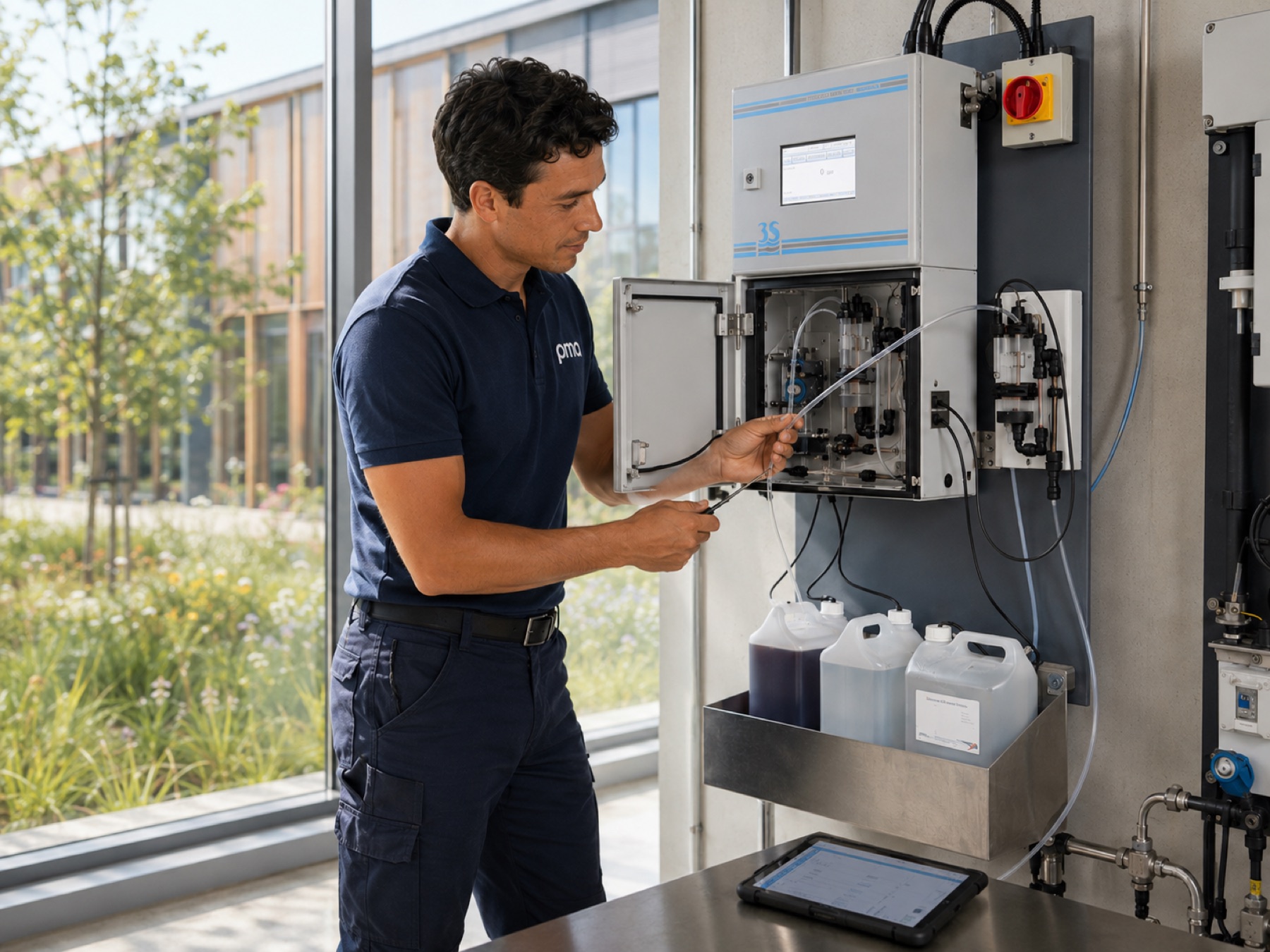
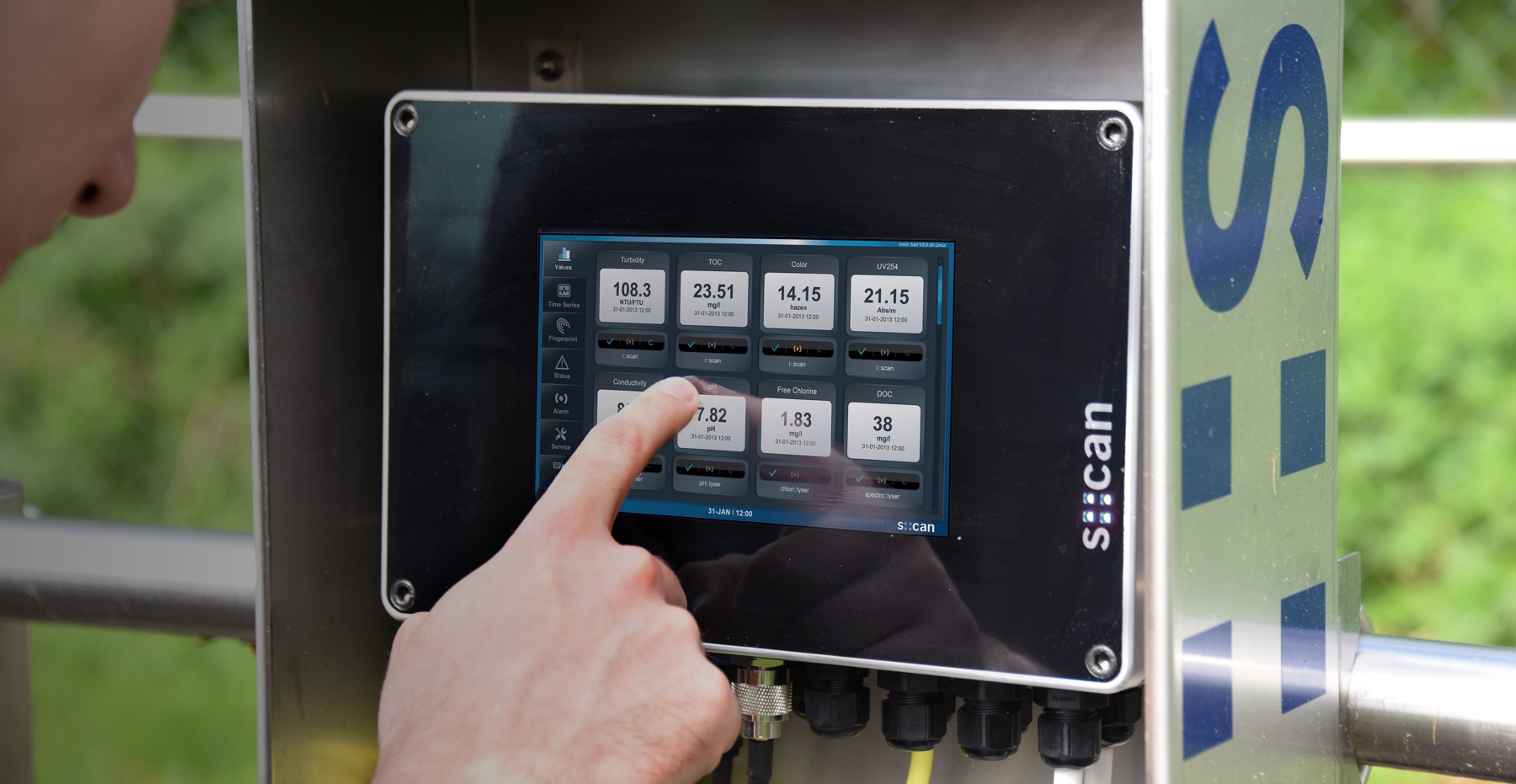
The Compass EOR system consists of a fully submersible UV-Vis spectrophotometer (the s::can spectro::lyser) which is installed on the raw water and measures from 200-750nm every two minutes. This spectral data is fed into the concube controller and several individual wavelengths are output to the Compass EOR controller via Modbus. Additionally, the concube also takes in an analogue input from a raw water turbidity and post clarified UV254 monitors.


On the common post clarified water, an i::scan is setup in a flow cell arrangement, measuring solids compensated UV254 every two minutes and the analogue output is fed back to the concube controller.

How does measuring multiple UV wavelengths provide better NOM characterisation than traditional UV254 or True Colour only based systems?
Compass EOR characterises NOM by calculating a dimensionless parameters using the ratios of absorbance readings at multiple UV wavelengths. A low NOM value(<0.3)implies that dissolved organic material is of low molecular weight and hydrophilic. Such material is not readily removed by coagulation and when present particulate matter tends to dominate coagulant demand. A high NOM value(>0.5)implies that dissolved organic material is of high molecular weight and hydrophobic(e.g.fulvic and humic acids). Such material is readily removed by coagulation and when present dominates coagulant demand. If the NOM value is between 0.3 and 0.5 it implies there is a mixture of organic molecules present and both particulate and organic matter influences coagulant demand. The NOM characterisation parameter is used by Compass EOR to determine the weightings used in their proprietary algorithms.
How do operations interact with a Compass EOR system?
Compass EOR is designed to enable full automatic coagulation control without operator interaction. However, the Compass EOR interface enables operators to manually intervene should they want to.

Need some advice or support? We’re here to help.
If you need a call back about how Process Measurement and Analysis can help you or have any questions at all please feel free to contact us at sales@pma.uk.com. A member of our experienced team will contact you directly.