An unexpected online analyser alarm should start a structured investigation, not end one. Treating every alert as proof of a process failure can trigger the wrong response; dismissing recurring alerts can hide a change that deserves attention. A site-specific first-response plan helps operators check the evidence in a consistent order and record why they acted.
The useful question is not simply “What is the alarm limit?” It is “What decision is this alert intended to support, and what evidence should be checked before that decision is made?”
Define what the alert means at this site
Separate a result moving away from its normal trend from a sudden step change, and distinguish both from an analyser or sample-system fault. These alerts may need different owners and different next steps.
An operational alert is not automatically a permit limit, a statutory sample result or proof of non-compliance. The applicable permit, approved monitoring method and site procedure determine the formal requirements. Agree locally who reviews each alert and when it must be escalated.
Check the measurement in a repeatable order
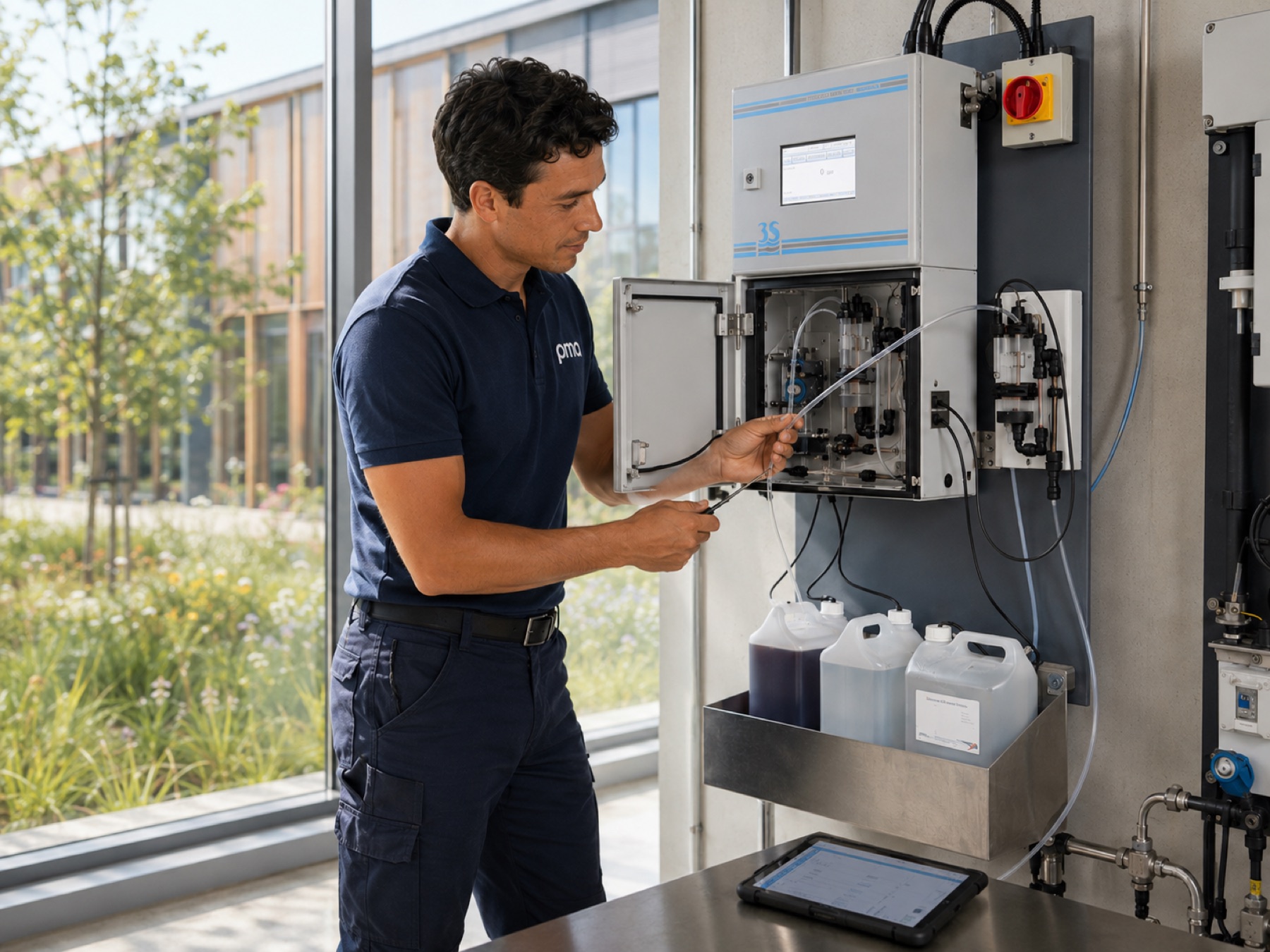
Start with the trend and the instrument record. Is the change persistent or a single cycle? Is the analyser reporting a fault, an overdue routine, an unusual reagent condition or a recent maintenance event? Check the installed configuration and the recorded status before interpreting the displayed value.
Then follow the sample. Inspect the take-off, flow, filtration, tubing and drain route that apply to the installation. A healthy analyser routine cannot establish that the water reaching the measurement cell is representative of the process.
Finally, review what else changed: dosing, flow, source water, plant operation or maintenance. Where a confirmatory sample is appropriate, make the comparison meaningful by checking the sample point and time, preparation, method, units and reporting basis. A difference between two results is a reason to investigate comparability, not an automatic verdict on either result.
This sequence complements the 3S guidance on automatic calibration, validation and cleaning. Automated routines support analyser operation; they do not replace checks of the sample route or process conditions.
Record the decision, not only the number
Capture the time, value and units, the relevant trend, instrument status, sample-system observations, process context, checks made and any follow-up sample. Record who owns the next action and what would trigger escalation. A short, consistent event record makes later review more useful than an isolated alarm log.
For multi-point systems, the PMA News guide to comparing two monitoring streams explains why the comparison question should be defined before results are interpreted.
Agree the response before commissioning
There is no universal alarm value or response time that is right for every parameter and site. Set expected trends, escalation routes and confirmatory checks with the responsible process, laboratory and compliance teams. Keep operational decisions distinct from formal reporting requirements.
PMA can discuss the application, sample conditions and operating routine for a 3S online analyser. Contact PMA to review the measurement objective and the response the site needs from its data.
Source attribution: This article is an original PMA News adaptation informed by 3S Water Analysers’ alarm-investigation planning article. It is general operational guidance, not a substitute for site procedures, permit conditions or approved methods.