


SV30 and SVI often appear together in an activated-sludge operating record, but they answer different questions. SV30 describes how much volume the sludge occupies after a defined 30-minute settlement test. Sludge Volume Index, or SVI, relates that settled volume to the mixed liquor suspended solids (MLSS) concentration of the sample.
Reading both figures together helps a team distinguish a change in settled volume from a change in solids concentration. A single number is less informative if the sample point, test method or MLSS value is uncertain.
What does SV30 tell you?
In a conventional one-litre test, SV30 records the volume occupied by the settled sludge after 30 minutes, commonly in millilitres per litre. It is a direct observation of that sample at that time. It does not tell you how much suspended-solids mass was present before the sample settled.
The test must be repeatable to support a trend. Keep the sampling location, vessel, timing and preparation consistent, and record whether the method is stirred or unstirred. A different procedure can change the number even if the treatment process has not changed.
What does SVI add?
SVI expresses settled volume relative to MLSS and is usually reported in millilitres per gram. For a conventional test, divide the settled volume in mL/L by MLSS in g/L. For example, a 200 mL/L settled volume with 2 g/L MLSS gives an SVI of 100 mL/g. The same settled volume with 4 g/L MLSS gives 50 mL/g. The volume has not changed; the mass used in the calculation has.
Use the MLSS concentration from the same representative sample. A value from another point or time may make the calculated index misleading. The S3A SVI parameter guide explains the measurement and its role in activated-sludge review.
Keep settlement and blanket depth separate
A settled-volume test uses a sample in a defined vessel. Clarifier sludge-blanket depth is a measurement in the full-scale tank. Both may be relevant to an investigation, but one should not be labelled as the other. Neither SV30 nor SVI identifies the cause of poor settling by itself; interpret the result alongside process observations and other measurements.
The distinction also matters for compliance language. SV30 and SVI support process operation; they do not replace the site’s required final-effluent sampling, suspended-solids laboratory analysis or regulatory reporting.
Where does the S3A fit?
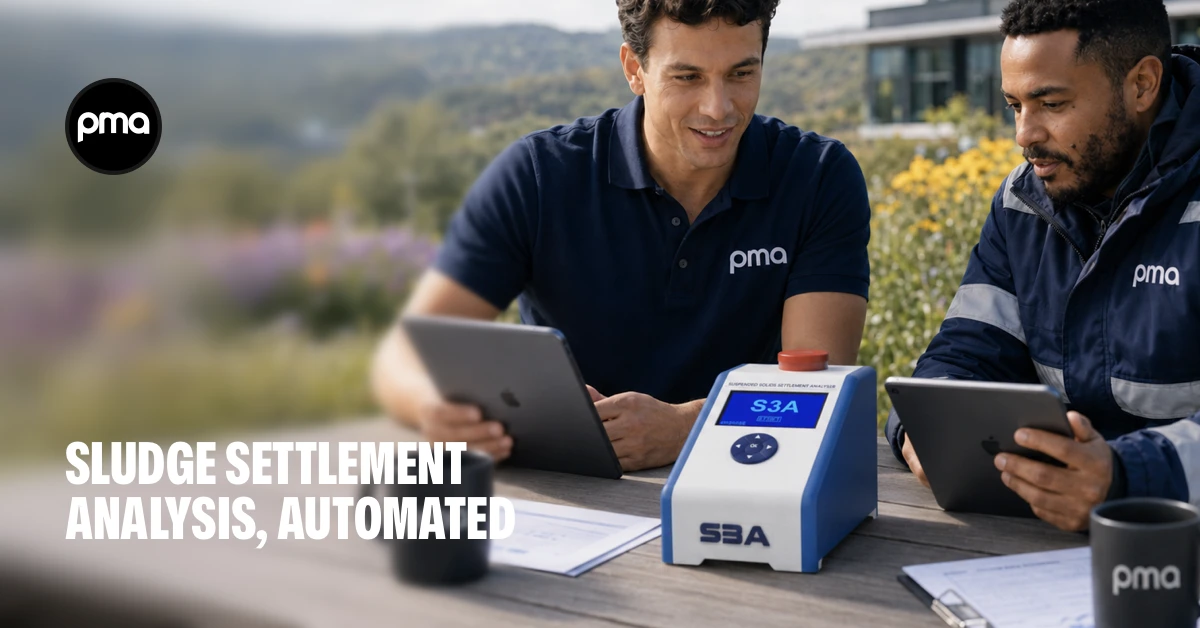
The S3A portable sludge analyser measures MLSS and then follows a 30-minute settlement cycle using its own representative sample. It reports settled sludge level and SVI, alongside other observations from that cycle. This is a defined instrument workflow, not a claim that its compact sample is the same as a manual one-litre SV30 reading.
When reviewing a new measurement workflow, ask which results need to remain comparable with historical site records. Document any change in vessel, sample size or method and label the resulting trend clearly.
A better operating record
Keep the raw settled-level result, MLSS, calculated SVI, sample point, time and test method together. If the index moves, these details help show whether the change came from the settled volume, solids concentration or both. The same discipline of representative sampling underpins our PMA News guide to comparing online water samples.
Common interpretation questions
Can two samples have the same SV30 but different SVI? Yes. SVI incorporates MLSS, so a different solids concentration changes the index even when the settled volume is the same.
Is a high SVI a diagnosis? No. It is a prompt to review the process and method. Compare the works’ own consistent trend and examine sampling, solids concentration, settlement observations and operating conditions before deciding what changed.
Read the original S3A article on SV30 and SVI for the complete source discussion. If you are assessing how to align the S3A with a treatment works procedure, contact PMA with the sampling point, existing method and reporting requirement.