

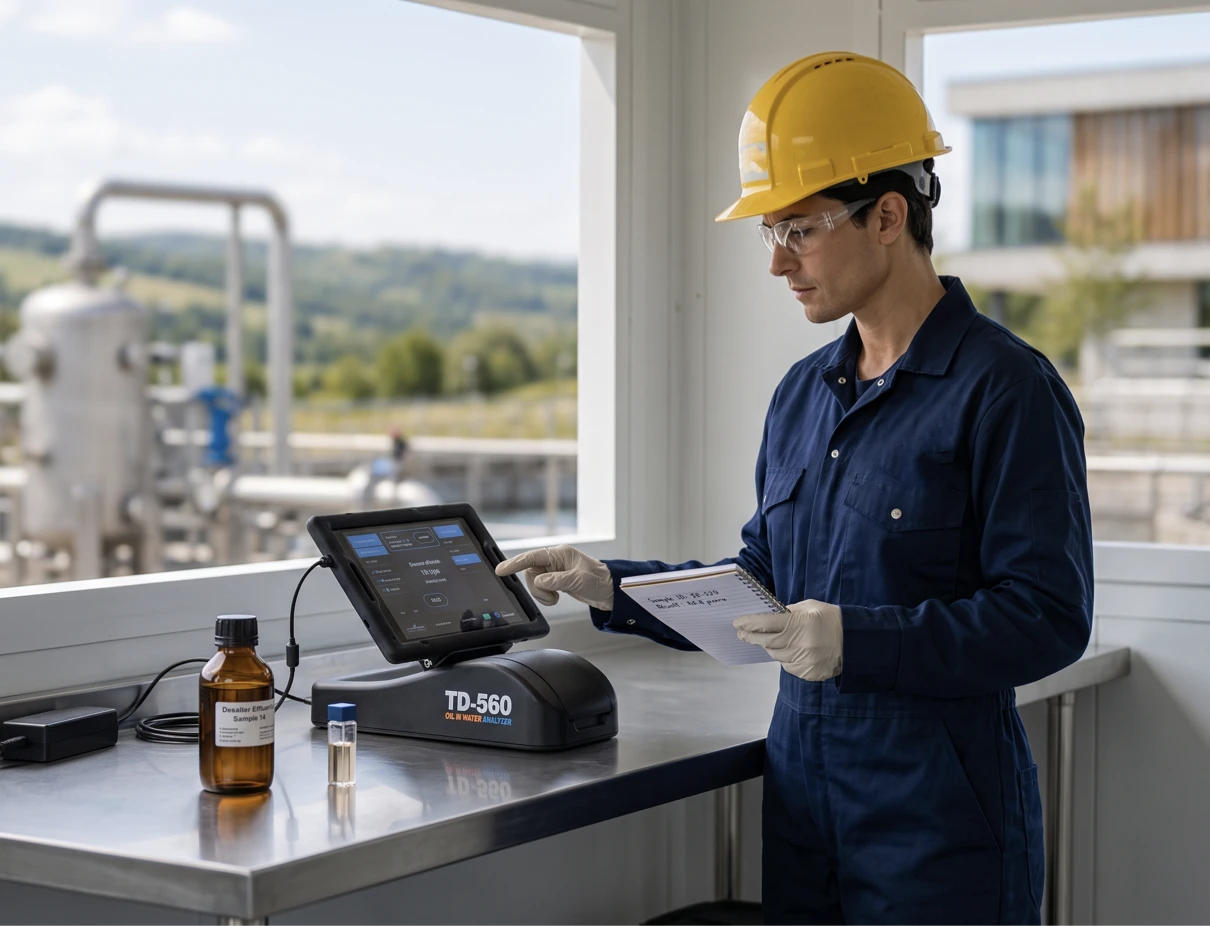

Two oil-in-water results can use the same unit and still describe different things. A laboratory gravimetric method and a UV-fluorescence instrument do not respond to identical material. If the numbers disagree, the right first step is to check the methods and sampling, not assume one instrument is wrong.
For oil in water testing, PMA recommends defining the decision before choosing a technique: is the result for permit reporting, rapid screening, treatment adjustment, or continuous trend detection? Each duty places different demands on sample collection, timing, calibration and quality control.
What the laboratory method reports
The US EPA lists Method 1664A as an extraction and gravimetric method for hexane-extractable material, with a silica-gel-treated determination available for non-polar material. It is a defined procedure with prescribed handling and quality controls, not a generic optical “oil concentration” reading. Check the current EPA approved-methods material and the site’s own permit and laboratory requirements for the applicable compliance method.
A laboratory result also represents the sample collected and preserved for that method. If an online sensor and a bottle sample represent different times or locations, a numerical comparison may say more about sampling than instrument performance.
What UV fluorescence responds to
UV fluorescence detects light emitted by fluorescent components after ultraviolet excitation. The instrument uses a selected calibration oil or surrogate to convert that response into an oil-equivalent result. A material that extracts in a gravimetric method may fluoresce weakly; a small aromatic fraction may produce a strong optical response.
Oil type, weathering, treatment and the water matrix can alter the relationship. The same nominal units do not create a universal conversion factor. The Turner Designs oil-in-water guide sets out this distinction in more detail.
Use paired evidence, not a one-off conversion
If both methods matter to a site, plan representative paired samples across normal and upset conditions. Keep the sampling point, time, handling and operating state documented. Review bias and variability over the actual oil types and water matrices, rather than fitting a single factor from one convenient sample.
The programme should define what an acceptable relationship means for the intended decision. A fluorescence trend can be excellent for spotting change while a laboratory method remains the formal reporting route. One does not automatically replace the other.
Choose the instrument around the workflow
A portable analyser supports discrete checks at selected locations. A fixed online monitor supports repeated measurements from a defined stream. PMA’s TD-120 oil-in-water monitor page describes a continuous option; the exact choice still depends on the oil, sample route, range and action expected from the result.
For a broader equipment-selection discussion, see our earlier PMA News guide to oil-in-water monitors. For the source method comparison, read the Turner Designs article.
A useful brief for PMA
Tell PMA which oil or hydrocarbon mixture is expected, where samples will be taken, the likely concentration range, whether results are needed continuously or at selected times, and which laboratory or permit method is relevant. Include the process action a change in result would trigger. This lets the team discuss instrumentation without implying that an operational optical reading is itself a compliance result.
Questions to ask when results differ
Were both samples representative of the same stream and time? Check the take-off, flow path, collection time, preservation and recent process events before comparing a laboratory bottle with an online trend.
Was the fluorescence calibration based on the target oil? A change in oil composition can change optical response without a matching change in gravimetric extract. Revisit the calibration and paired-sample plan when the process changes.
If the method relationship is uncertain, contact PMA with the target oil, sample matrix and existing analytical procedure. The responsible laboratory and regulator should determine formal method compliance.